Journal / Bedsheet care
Why do bedsheets get those tiny balls? (Pilling, explained)
They aren’t dirt. As a textile designer, I can tell you they’re your sheet’s own fibres, rubbed loose and rolled up. Here’s why it happens, and what actually keeps a sheet smooth.
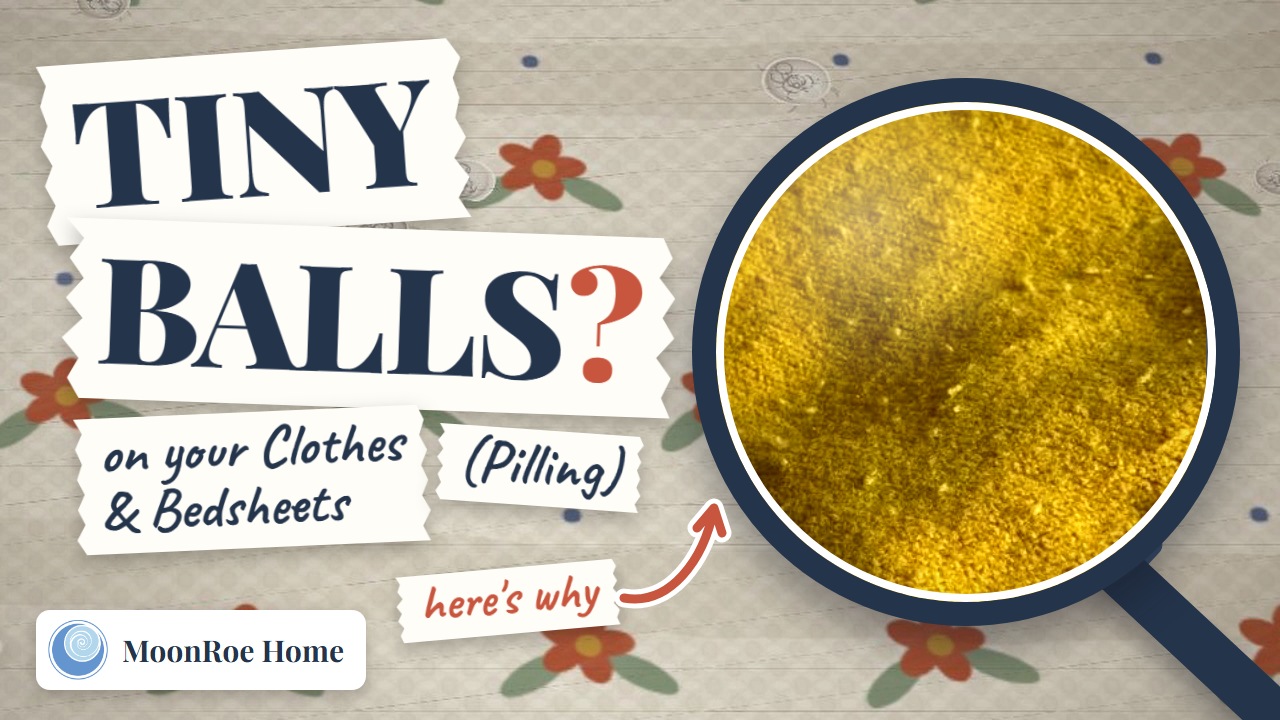
Prefer to watch? The 3-minute video zooms from your bed down to a single cotton fibre. Tap a chapter to jump to it.
- 0:26 The weave
- 0:43 How a pill forms
- 1:23 Long vs short staple
- 1:46 Cotton vs polyester
- 2:07 Washing
- 2:37 Removing pills
Read the video transcript
This is your favourite bedsheet. You’ve had it for a while, and it still looks lovely. But run your hand across it, and you feel them. Tiny bumps.
You’ve seen these on an old sweater, or your favourite T-shirt. They’re called pills. And they show up on your bedsheet too, the fabric you spend eight hours a night on. So why do bedsheets pill over time? Let’s take a much closer look.
Up close, your sheet is woven. Threads go over and under each other, like a basket. Each thread is spun from thousands of tiny cotton fibres, twisted together. And here and there, a few fibre ends poke out.
Every night, those loose ends get rubbed. By your body as you turn, by the mattress underneath, and in every single wash. Rub them enough, and the loose ends tangle together into a tiny ball. That’s a pill. Washing your sheets with rough things, like towels and jeans, rubs harder, so it happens faster. Repeat that over hundreds of nights and washes, and your favourite sheet slowly turns fuzzy.
So, can you stop it? Yes, and it starts with choosing the right fabric for your bedsheet: one hundred percent pure cotton. To see why, let’s follow the journey from fibre, to yarn, to fabric.
Every cotton fibre has a length, called its staple. Short-staple fibres are only about two centimetres long. Long-staple fibres reach three centimetres or more. Spin short fibres into a yarn, and lots of loose ends stick out. Spin long fibres, and there are far fewer ends. The yarn is smoother and stronger, and less prone to pilling.
The fibre itself matters too. Polyester fibres are very strong, so when a pill forms, it stays stuck to the fabric and keeps growing. Cotton pills tend to break away in the wash. That’s why a one hundred percent cotton sheet, especially long-staple cotton, tends to stay smoother for longer. How it’s spun and woven matters too.
Then, how you wash it. Wash bedsheets and blankets on their own, away from towels and jeans. Choose a gentle cycle, at the temperature on the care label, and don’t overload the machine. And always follow the care label on your sheet. It’s written for that fabric.
In our own home, we have a cotton bedsheet that’s been in use for about ten years. It’s always washed on its own, in room-temperature water. And it still has no pills. If anything, it’s only got softer.
But what if the sheet you’re using now already has pills? Remove them gently with a fabric shaver. Don’t pull them off, because pulling drags out even more fibres.
So, for your next bedsheet, choose one hundred percent long-staple cotton, and wash it gently, on its own. Your favourite sheet can stay your favourite for much longer.
What is pilling?
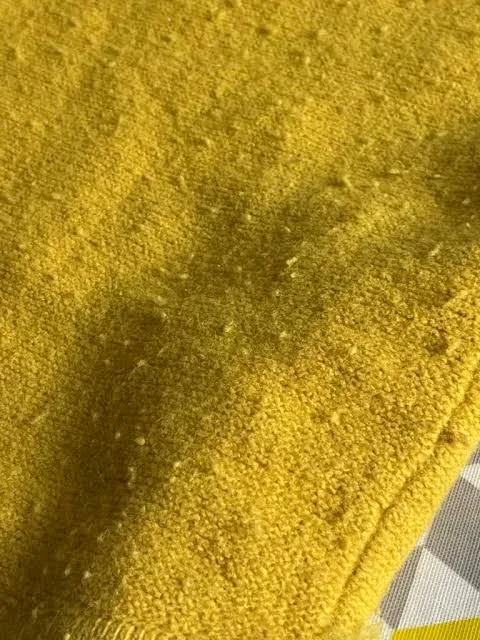
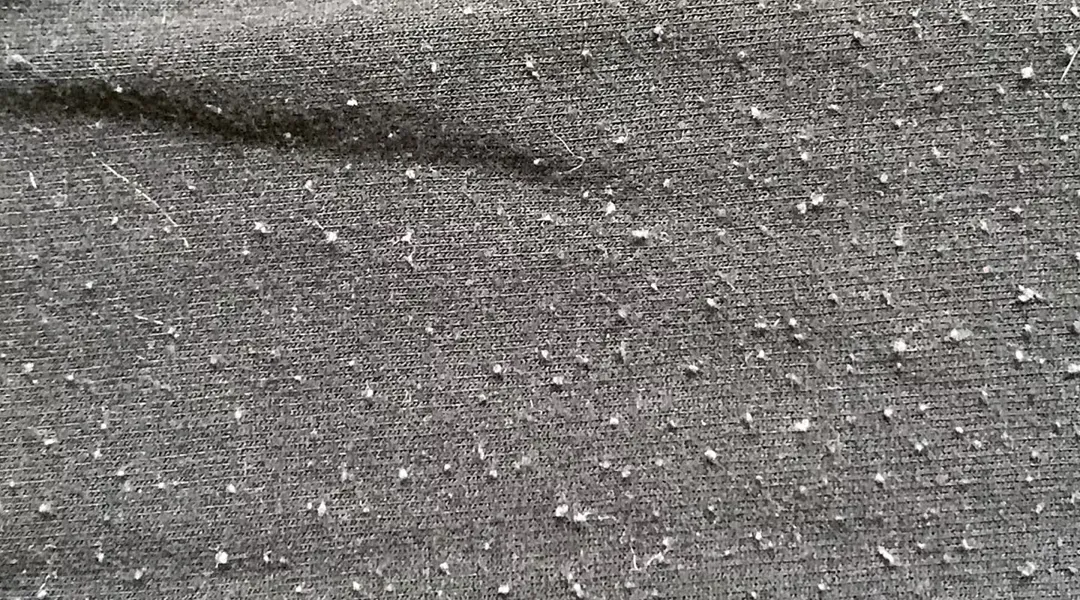
A pill is a tiny ball of tangled fibres that forms on the surface of a fabric. You might have seen them on an old sweater or a favourite T-shirt. They appear on bedsheets too, and you usually feel them before you see them: run your hand across the fabric and you’ll notice tiny, rough bumps.
Pills aren’t dirt, and they aren’t fluff from somewhere else. They’re made from your sheet’s own fibres.
Why do bedsheets pill?
To show you where a pill comes from, let me take you in close. A long way in.
1 Your sheet is made of yarns, and yarns are made of fibres
The threads in a sheet are woven, that is, they go over and under each other, like a basket. Each thread is a yarn, made by twisting thousands of tiny cotton fibres together. Here and there, a few fibre ends stick out of the yarn.
2 Rubbing pulls the loose ends out
Your body rubs the sheet every night as you turn, and every wash rubs it again. Each time, a little more fibre is pulled out. It’s usually highest under your shoulders, hips and heels, and where your head rests on the pillow cover, so pills tend to start there.
3 The loose ends tangle into a tiny ball
When the loose ends keep getting rubbed, they twist around each other and form a tiny knot that stays attached to the yarn. That knot is called a pill.
4 Washing with rough fabrics makes it faster
Washing sheets with heavy, rough clothes, such as towels and jeans, rubs them far harder than a night’s sleep does. Crowded machines and hot water make it worse.
Natural vs synthetic fibres: does the material matter?
You may have seen pills on a favourite T-shirt or sweater, but not on your jeans or an old cotton kurta. The reason is that pills only form where loose fibre ends stick out of a fabric. When the yarn is smooth and well made, there are very few loose ends, so there is little for a pill to form from. This is true for natural and synthetic fibres alike.
Fibres come in two broad kinds. Natural fibres, such as cotton, wool and linen, come from plants or animals. Synthetic fibres, such as polyester, nylon and acrylic, are made in factories. The difference shows up after a pill has formed. Synthetic fibres are very strong, so the pill holds on tightly and gets bigger, as more loose fibres tangle into the same ball. Natural fibres let go more easily, so their pills often come off in the wash and the fabric stays smoother.
Blends, such as poly-cotton and “cotton-rich” (cotton mixed with another fibre, often polyester), can hold on to pills in the same way, so they may look bobbly sooner.
Good to know: “microfibre” usually means polyester. It feels silky and smooth at first, but after a few nights you notice the difference from cotton: it holds heat and feels warmer. Many sheets are sold simply as “microfibre”, so always check the fibre content on the label before buying.
For bedsheets, cotton is the natural fibre most people choose, so let’s look at what makes one cotton sheet smoother than another.
| Natural fibres (like cotton) | Synthetic fibres & blends | |
|---|---|---|
| When do pills form? | Only where loose fibre ends stick out | Only where loose fibre ends stick out |
| If a pill forms | Often lets go in the wash | Holds on and gets bigger |
| Smooth, well-made yarn | Little or no pilling | Little or no pilling |
Solution: 100% cotton. Long-staple vs short-staple fibres
If I could ask you to check just one thing on a bedsheet, it would be this. Every cotton fibre has a length, called its staple, and it’s the biggest clue to how a cotton sheet will pill.
- Short-staple cotton: fibres around 2 cm long.
- Long-staple cotton: 3 cm or more.
- Extra-long-staple cotton: about 3.5 cm or more, as in some Egyptian and Pima varieties. These longest fibres make the smoothest, strongest yarn, so many people consider them the finest cotton in the world. They are also grown in limited amounts, which is why they cost much more.
When a yarn is made from short fibres, many fibre ends stick out along it, and each loose end can turn into a pill later. Long fibres leave far fewer ends, so the yarn feels smoother, is stronger and is less likely to pill.
| Short staple | Long staple | |
|---|---|---|
| Loose ends | Many | Few |
| Yarn | Fuzzier, weaker | Smoother, stronger |
| Pilling | Pills sooner | Less prone to pilling |
How the yarn is spun and woven also matters. Before cotton is spun into yarn, it can be “combed”: fine combs pull out the shortest fibres and line up the rest, so the yarn comes out smoother with fewer loose ends. A tight, even weave helps too. A higher thread count in a fabric can’t make up for short fibres either, because it only tells you how many threads there are in one square inch of the fabric, not how long the fibres inside them are.
How to wash your bedsheets to avoid pilling
Choosing the right fabric is only half the job. The other half is how you care for your bedsheets, and that starts in your washing machine. Here’s what I recommend:
- Wash sheets separately, away from heavy fabrics such as towels or jeans.
- Choose a gentle cycle. Less tumbling, less rubbing.
- Use cold water (room-temperature water is fine), or follow the temperature on your sheet’s care label.
- Don’t overload the machine. Sheets need room to move.
- Use a mild detergent, and don’t bleach. Bleach and harsh detergents weaken cotton.
- Dry gently: line-dry in the shade, or tumble-dry on low.
Always check the care label of your fabric first, as it is written for that particular fabric. On our sheets, the wash care instructions are: cold machine wash, gentle cycle, tumble dry on low heat or line dry in the shade, can be ironed on the reverse, do not dry clean, and do not bleach.
How to remove pills from your existing bedsheets
- Lay the sheet flat and smooth out any wrinkles.
- Light fuzz: remove it with a lint roller or packing tape.
- Larger areas: glide a fabric shaver (lint remover) lightly. Don’t press.
- A few big pills: snip them off with small, sharp scissors, but be very careful not to cut the fabric.
- Never pull pills off. Pulling drags more fibre out of the yarn, so new pills come faster.
An example from my own home: a bedsheet used for ten years
As an example, I have a cotton bedsheet at home that I have been using for about ten years. I always wash it separately, in room-temperature water. Even after ten years, it still has no pills and has remained smooth. If anything, it has only got softer.
It’s the best proof I know of everything in this guide: choose the fibre well, wash it gently, and a sheet can stay your favourite for years.
Checklist for your next bedsheet
- 100% cotton: the label says 100% cotton, not “cotton-rich” (cotton mixed with other fibres) or “poly-cotton”. “Microfibre” usually means polyester.
- Long-staple: it says long-staple cotton. If it doesn’t, ask the seller.
- Smooth surface: it feels smooth, with no fuzz, even when new.
- Thread count: for many cotton sheets, 200 to 500 is a good place to start. Higher counts can be lovely too when the fibre and the yarn are good, so look at those first.
- Clear care label: there’s a care label you can easily follow.
Save this list, or screenshot it, for the next time you shop.
FAQs
Do 100% cotton bedsheets pill?
They can, especially if they’re made from short-staple cotton. Long-staple cotton sheets are much less prone to pilling, and the pills that do form on cotton tend to break away in the wash rather than build up.
Is pilling a sign of a poor-quality bedsheet?
Usually it points to short fibres, a polyester blend, or rough washing. A little surface fuzz in the first few washes can be normal. Pills that stay stuck, get bigger and never wash away usually mean the sheet has polyester in it.
Does a higher thread count stop pilling?
Not by itself. Thread count only tells you how many threads there are in one square inch of fabric, not how long the fibres inside them are. For many cotton sheets, 200 to 500 is a good place to start, and long-staple cotton in that range will usually stay smoother than a very high thread count made from short fibres.
Is microfibre the same as polyester?
In most bedsheets, yes. “Microfibre” describes very fine fibres, not the material, and these are usually polyester, sometimes nylon. So a microfibre sheet is a synthetic sheet, even if it feels soft. Check the fibre content on the label to be sure.
Can you stop pilling once it starts?
You can remove the pills you have with a fabric shaver or lint roller, and slow new ones by washing the sheet separately, on a gentle cycle, without overloading the machine. The lasting fix is a long-staple cotton sheet next time.
Does a fabric shaver damage bedsheets?
Not if you use it gently on a flat, smooth sheet. Pressing hard or going over one spot again and again can thin the fabric, so use light strokes and stop once the surface is smooth.
Bedsheet par roye (ruye) kyun aate hain?
Bedsheet par jo chhote-chhote roye aate hain, unhe pilling kehte hain. Ye bedsheet ke apne cotton fibres hote hain, jo ragad se dhaage se bahar nikal kar gol ho jaate hain. Inse bachne ke liye 100% long-staple cotton ki bedsheet lein, use towels aur jeans se alag, gentle cycle par dhoyein, aur roye ko kheenchein nahin, lint remover se hataayein.

From MoonRoe Home
Art for your bedroom.
That’s what I set out to make at MoonRoe Home: long-staple cotton bedsheets with fresh, original designs of our own, so your bed becomes the art in your room. MoonRoe Home launches on 31st October. Follow along on Instagram, and subscribe on YouTube for more simple bedsheet care tips.